Quick Takeaways
- Discover what seasonal events are, why they matter, and how to plan them — from STEM science days to global festivals. Your 2026 complete guide.
Make Your Event Unforgettable
Book professional artists, interactive activities, and entertainment that keep your guests engaged and entertained.
You probably didn't stumble onto this page by accident. Maybe you're planning a team gathering, trying to align a brand moment with the right time of year, or just trying to understand why certain events hit differently depending on when they happen.
Here's the thing — seasonal events are one of the most underestimated levers in event planning. Get the timing right, and you're working with the crowd's existing energy. Get it wrong, and you're dragging people to a beach party in January, wondering why nobody showed up.
This guide covers everything: what seasonal events actually are, why they work psychologically, how to plan them across every quarter, and where STEM and scientific milestones fit into your 2026 calendar.
Quick Answer: What Are Seasonal Events?
Seasonal events are recurring gatherings, activities, or experiences that derive their meaning and timing from the time of year — whether driven by nature (equinoxes, harvests), culture (Diwali, Christmas, Lunar New Year), science (meteor showers, space launches), or industry (academic cycles, product launch seasons).
They work because humans are wired to respond to temporal landmarks — moments that stand apart from the monotony of routine. A seasonal event signals: this moment matters. That psychological hook is what makes them so effective for community building, corporate engagement, and brand storytelling.
What Are Seasonal Events? A Deeper Look
The simple definition is any event anchored to a specific season or time of year. But the more useful definition is this: a seasonal event is a strategic window — a moment when the world's collective attention, mood, and energy naturally aligns around a theme.
Think about how differently you approach a New Year's Eve party versus a random Saturday night. Same room, same people — but the timing changes everything. That's the power of seasonal context.
Seasonal events can be formal or casual, massive or intimate, ancient or brand new. What they share is relevance: they feel timely, not forced. A pumpkin festival in October feels natural. In March? You'd need a very good explanation.
For brands and event organizers, this relevance is the difference between an event that generates genuine excitement and one that feels like an obligation on the calendar.
Why Timing Is a Psychological Lever
Research on behavioral psychology identifies seasonal events as classic examples of "temporal landmarks" — moments that prompt what scientists call the fresh start effect. People are more open to new ideas, social connections, and emotional experiences at the start of a new season or cultural milestone.
That's why January brings gym memberships, April brings planning retreats, and December brings year-end reflection. Seasonal events don't just mark time — they shape how people feel about participating in experiences during that time.
What Are Seasonal Activities?
Seasonal activities are the specific actions, experiences, or sub-events that live inside a broader seasonal context. Think of the season as the stage and the activities as the performance.
Here's how activities map to each season:
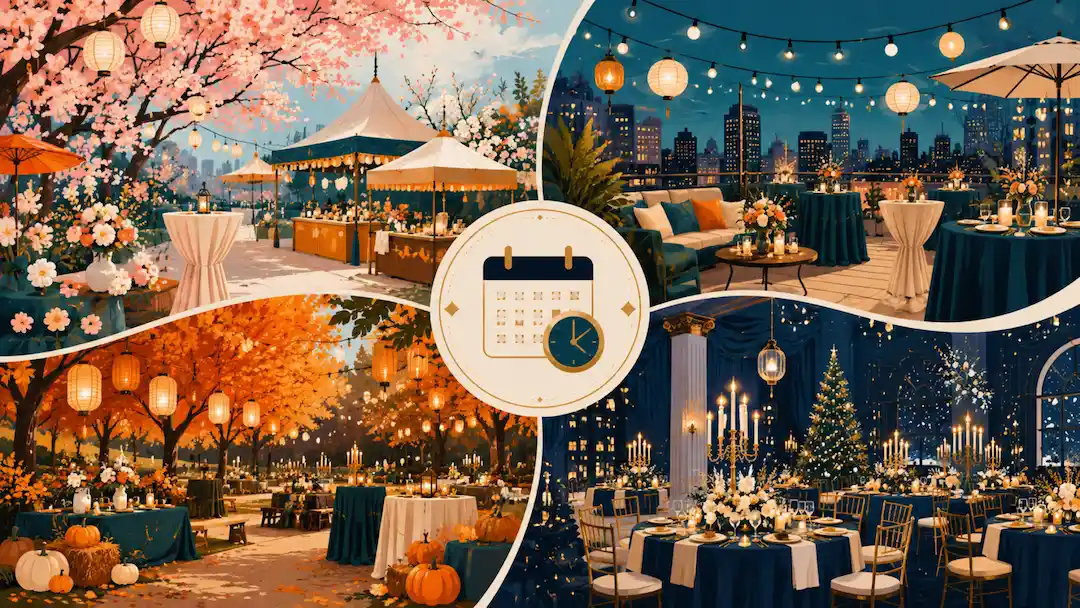
Spring is about renewal and growth. Activities lean toward the outdoors and the optimistic — garden festivals, community clean-ups, cherry blossom picnics, sunrise yoga sessions, and science fairs that celebrate new beginnings.
Summer brings high energy and movement. The classic seasonal activities here are music festivals, beach sports tournaments, rooftop networking nights, outdoor cinemas, and sunrise-to-sunset adventure challenges. The sun stays up longer; so do the people.
Autumn shifts the mood toward reflection and harvest. Think food festivals, cider tastings, forest hiking expeditions, cosy indoor workshops, and cultural harvest fairs. The energy slows down — but in a good way. People are more thoughtful, more willing to engage in deeper conversations.
Winter is the season of celebration, coziness, and retrospection. Ice skating, holiday markets, gala dinners, "fireside chat" speaker series, and year-end award ceremonies dominate this quarter. The goal is warmth — literal and emotional.
Understanding which activities fit which season isn't about following a rulebook. It's about reading the room. The room, in this case, is the entire planet.
What Is the Meaning of a Season Event?
At its core, a season event is an occasion that borrows its significance from when it happens. It's not just a gathering — it's a gathering with context.
The meaning of a season event comes from three layers:
Cultural meaning — traditions passed down through generations that give a moment shared significance. Diwali means something to millions of people before the invitations even go out.
Natural meaning — events tied to the physical world, like solstices, equinoxes, harvest periods, or meteor showers. These carry a primal resonance that transcends any single culture.
Constructed meaning — the meaning that organizers create through intentional framing. A "Q4 Innovation Sprint" doesn't have the history of Oktoberfest, but when branded and executed well year after year, it becomes a seasonal anchor in its own right.
The best seasonal events layer all three. They take a natural or cultural moment, add a constructed theme relevant to their audience, and deliver an experience that feels both timely and memorable.
Seasonal Events Examples: From Global Festivals to STEM Milestones
The range of seasonal events is wider than most people realize. Here's a breakdown across categories.
Global Cultural Festivals
Holi — The Indian festival of colors celebrates the arrival of spring with an explosion of pigment, music, and community joy. It's the most visually arresting seasonal event in the world and has been adapted by brands globally for product launches, team events, and outdoor campaigns.
Oktoberfest — Bavaria's autumn celebration of food, beer, and folk culture has become a global template for seasonal hospitality. Its format — communal tables, shared experiences, a defined aesthetic — is replicated everywhere from Mumbai to Melbourne.
Lunar New Year — Observed across China, Vietnam, Korea, and diaspora communities worldwide, this spring-adjacent celebration focuses on family, renewal, and prosperity. For brands operating in Asian markets, it's one of the most important seasonal windows of the year.
Diwali — The festival of lights transforms cities into celebrations of warmth and community. Corporate events timed around Diwali tap into one of the highest emotional-engagement windows in Q4.
Halloween — A predominantly Western autumn event that has gone global. Its creative, costume-driven energy makes it one of the most brand-friendly seasonal moments of the year.
STEM and Scientific Seasonal Events
Here's a category that's growing fast — and still underutilized by most event planners.
Scientific milestones, NASA launch windows, and global science days create seasonal moments with a different kind of energy: curiosity, wonder, and the feeling of being part of something larger than yourself. For corporate teams, educational institutions, and innovation-focused brands, these are the "STEM bangers" — events that feel fresh, distinctive, and genuinely engaging.
Monthly STEM Events Calendar (2026)
| Month | STEM Event / Theme | Suggested Activity |
|---|---|---|
| January | Perihelion — Earth closest to the Sun | Solar observation workshops, energy efficiency challenges |
| February | International Day of Women in Science | Mentorship panels, coding bootcamps, STEM career showcases |
| March | National Science Day + Pi Day (Mar 14) | Math-themed bake-offs, physics demos, science fairs |
| April | Earth Day + Global Astronomy Month | Community planting drives, stargazing nights |
| May | National Space Day | Model rocket launches, VR space exploration tours |
| June | Summer Solstice Science | Solar power experiments, light and shadow studies |
| July | Moon Landing Anniversary (July 20) | Apollo-themed trivia nights, aerospace history deep dives |
| August | Perseid Meteor Shower (peak ~Aug 11–13) | Overnight camping, astrophotography sessions |
| September | Autumn Equinox + Engineering Month | Bridge-building challenges, structural design competitions |
| October | World Space Week (Oct 4–10) | Satellite tracking, guest lectures from space industry professionals |
| November | STEM Day (Nov 8) | Cross-disciplinary hackathons, innovation showcases |
| December | Winter Solstice + Computer Science Education Week | Hour of Code events, robotics demos, tech retrospectives |
What makes the NASA events calendar particularly powerful for event planners is that it generates shared global attention — millions of people are already watching a rocket launch or a meteor shower at the same time. Attaching your event to that moment gives it instant cultural relevance, even if your audience is sitting in a conference room in Gurugram rather than watching from a launch pad.
A Quarter-by-Quarter Seasonal Events Calendar for 2026
Planning across the full year means understanding the distinct energy of each quarter — not just the individual dates within it.
Q1 (January–March): Reset and Research
The post-holiday lull isn't a dead zone — it's a planning window. People are in "New Year, New Start" mode, which makes them unusually receptive to learning, goal-setting, and community connection.
Scientific events in March are particularly valuable here. Pi Day (March 14), National Science Day across multiple regions, and the Spring Equinox (around March 20) all create natural hooks for education-forward events. Corporate workshops framed around "The Science of Better Performance" or "Springing Forward Together" tap into this mood perfectly.
The tone for Q1 events should be energizing but purposeful — less about spectacle, more about substance.
Q2 (April–June): Growth and Connection
As weather improves across the Northern Hemisphere, events move outdoors and moods lift. Earth Day (April 22) provides one of the year's strongest platforms for sustainability-themed events. National Space Day in May adds a science layer for innovation-focused teams.
This is the quarter for what we'd call growth bangers — events centered on expanding networks, launching new initiatives, and building momentum before the summer slowdown. Mid-year kickoffs and planning retreats work especially well here.
Q3 (July–September): Innovation and Heritage
Q3 is split personality. July and August carry the relaxed, high-energy feel of summer — ideal for large outdoor festivals, brand activations, and community celebrations. Independence Day events (US, India, and others) dominate July's first weeks.
September flips the script with "back to school" energy — sharper focus, more willingness to engage with complex ideas. Tech summits, innovation sprints, and hackathons all land better in September than almost any other month. For brands with audiences in India, this quarter also captures the pre-festive energy building toward Navratri and Dussehra — a powerful emotional ramp-up period.
Q4 (October–December): The Festive Peak
This is the golden quarter. Halloween, Diwali, Bonfire Night, Thanksgiving, Christmas, Hanukkah, New Year's Eve — Q4 is a non-stop sequence of cultural moments, and each one is an event opportunity.
The strategic challenge in Q4 isn't finding events to attach to — it's avoiding calendar overload. The smartest event planners use Q4 for one or two high-impact gatherings rather than trying to celebrate everything. A single, well-executed year-end event that combines celebration and forward momentum outperforms six mediocre seasonal parties every time.
Plan Q4 events in Q2. Venues, vendors, and catering teams book out months in advance.
Are Seasonal Events Virtual, In-Person, or Hybrid?
The short answer: all three work, but each serves a different purpose.
| Format | Best For | Key Advantage | Watch Out For |
|---|---|---|---|
| In-Person | Team building, community festivals, cultural celebrations | Highest sensory engagement and human connection | Geographic limits, higher cost, weather dependency |
| Virtual | Distributed teams, global audiences, STEM learning events | Unlimited reach, lower cost, flexible scheduling | Screen fatigue, harder to create emotional peaks |
| Hybrid | Product launches, corporate summits, major brand moments | Combines physical energy with global scale | Requires dual production quality; one format often suffers |
The format question matters less than the intent question. A poorly planned in-person event will always lose to a well-designed virtual one. Start with your goal — reward, educate, launch, connect — and let that drive the format decision.
Can Seasonal Events Be Branded or Customized?
Absolutely — and this is where generic seasonal gatherings become genuinely memorable experiences.
Branding a seasonal event means more than putting a logo on a banner. It means building a thematic world that aligns your organization's identity with the season's natural energy. Instead of a "Winter Party," you run "The Arctic Innovation Summit." Instead of an "Earth Day clean-up," you host "The Green Sprint Challenge."
Three elements that separate a branded seasonal event from a generic one:
An ownable theme — specific enough to be distinctive, flexible enough to run year after year.
Tangible touchpoints — seasonal kits, custom swag, or digital assets that extend the experience beyond the event itself.
Narrative continuity — the event should feel like part of an ongoing story, not a one-off moment. The best seasonal events build anticipation because people remember the last one.
How to Execute a Seasonal Event That Actually Works
Great seasonal events don't happen by accident. Here's a simplified framework that works whether you're planning a Diwali corporate event or a summer community festival.
Set one clear objective. Is this event about rewarding your team, launching a product, building community, or generating content? A single clear goal shapes every decision that follows — venue, format, activities, and measurement.
Plan against the season's energy, not just the date. A December event should feel warm and reflective, not high-pressure. A March event should feel forward-looking and energized. Work with the season, not against it.
Build in a "long tail." The best seasonal events generate content, social proof, and team momentum that extends well beyond the day itself. Post-event surveys, photo collections, social shares, and follow-up newsletters all extend the event's value.
Budget for quality over quantity. One memorable seasonal experience per quarter beats four forgettable ones. Allocate budget to the elements that create lasting impressions — speakers, food, experience design, and post-event touchpoints.
Frequently Asked Questions
What are seasonal events?
Seasonal events are recurring gatherings or activities that take place at specific times of year, aligned with the weather, cultural holidays, scientific milestones, or industry cycles. They mark meaningful moments in time, foster community, and create shared experiences that feel relevant to the moment.
What are seasonal activities?
Seasonal activities are the specific experiences associated with each season — skiing and ice skating in winter, outdoor festivals and beach sports in summer, hiking and harvest fairs in autumn, and garden events and science fairs in spring. They reflect the natural mood and conditions of the time of year.
What is the meaning of a season event?
A season event draws its primary significance from when it occurs. It aligns a social or professional gathering with the natural, cultural, or scientific energy of a particular time of year — making it feel timely and resonant rather than arbitrary.
What are examples of seasonal festivals?
Classic examples include Holi (spring, India), Oktoberfest (autumn, Germany), Lunar New Year (late winter/early spring, pan-Asian), Diwali (autumn, India), and Halloween (autumn, global). On the scientific side, World Space Week, Earth Day, and the Perseid Meteor Shower are growing examples of modern seasonal festivals.
How do I find scientific events in March or NASA events?
March consistently features National Science Day (observed in India and other regions), Pi Day on March 14, and the Spring Equinox around March 20. For NASA-specific events — including launch schedules, eclipse calendars, and meteor shower dates — the official NASA events calendar at nasa.gov is the most reliable source. The International Science Council also publishes a global STEM events calendar annually.
How early should I start planning a seasonal event?
For Q4 events (October–December), begin planning in Q2 — venue and vendor availability drops sharply after August. For Q1–Q3 events, six to eight weeks of lead time is the minimum for a quality experience; three months is ideal for anything with external speakers, custom production, or large guest lists.
Making Every Season Count
Seasonal events work because they meet people where they already are — emotionally, culturally, and physically. The season does half the work. Your job as a planner or organizer is to do the other half: show up with a clear purpose, a memorable experience, and enough lead time to execute it properly.
Whether you're building a STEM showcase around the Perseid meteor shower, planning a Diwali activation for your corporate team, or creating a summer banger that people are still talking about in November — the calendar is full of opportunities. The question is which ones you choose to own.
Explore more:
Make Your Event Unforgettable
Book professional artists, interactive activities, and entertainment that keep your guests engaged and entertained.
Get the latest in your inbox
Actionable insights on events, workshops, and engagement—no spam.
Make Your Event Unforgettable
Book professional artists, interactive activities, and entertainment that keep your guests engaged and entertained.
Related reads
How Much Should You Budget for Activities at a Corporate Family Day? Real Numbers by Headcount
Skip the bundled quote. Real per-head activity pricing for corporate family days in Delhi NCR, broken down by headcount, so HR teams can budget with actual numbers.
6 Questions to Ask Before Booking Party Entertainment in Delhi NCR (And the Red Flags to Watch For)
Avoid booking mistakes with this Delhi NCR entertainment vendor checklist. Real questions to ask, red flags to spot, and how to avoid the agency markup problem.
How Many Caricature Artists or Activity Stations Do You Actually Need? A Guest-Count Calculator
Avoid long queues at your event. Real throughput numbers for caricature, face painting & DIY activities, and the math to calculate how many artists your guest count needs.
Latest reads
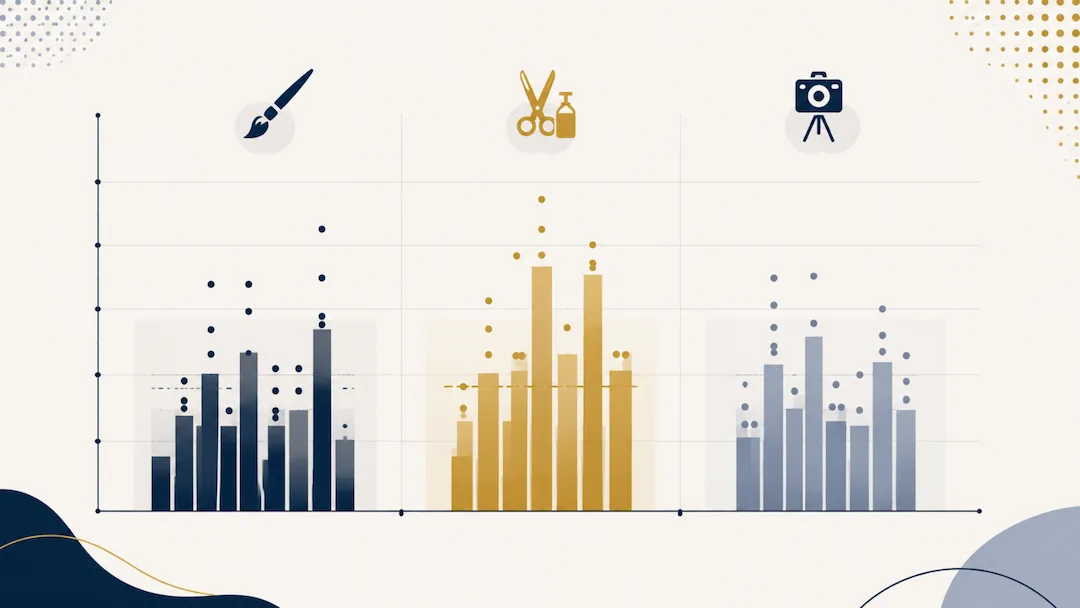
Delhi NCR Party Entertainment Pricing Report 2026: Original Data Across 51 Activities
Original pricing data across 51 party entertainment activities in Delhi NCR. Average costs, category breakdowns, and location pricing, citable and sourced.

Skip the Separate Return Gift: Activities That Double as Party Keepsakes
Return gifts eat 20-35% of Delhi NCR party budgets. See which activities like mug caricature and DIY crafts can replace a separate return gift entirely.
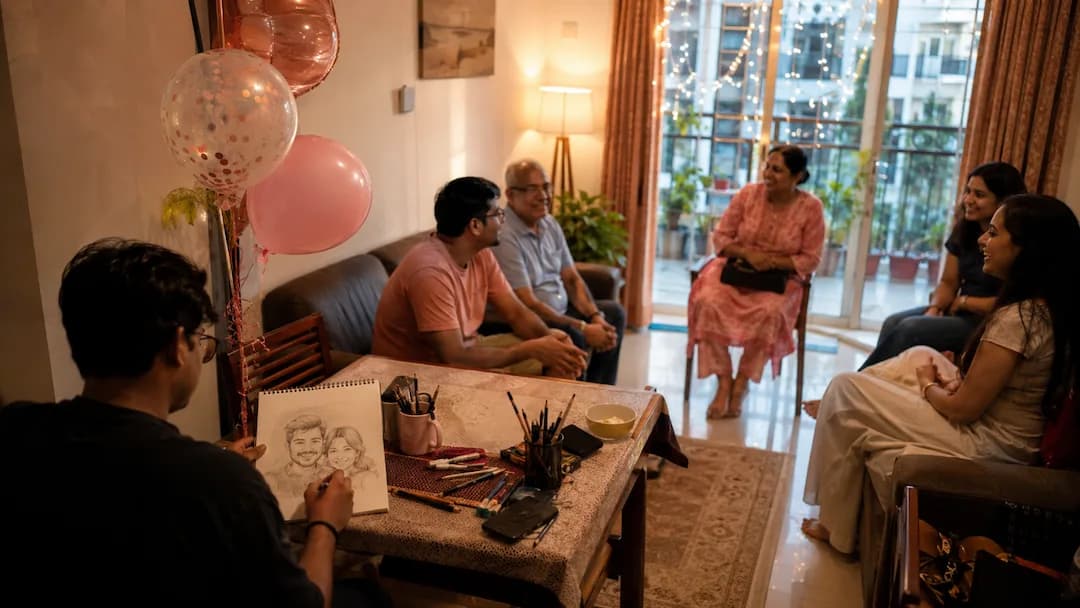
Party Entertainment That Actually Fits Your Apartment: A Small-Space Guide for Delhi NCR
Hosting in a flat, not a banquet hall? Real guidance on which party activities fit compact Delhi NCR apartments, and which ones genuinely need more space.