Holi Celebration Ideas for Housing Societies in Delhi NCR: A Practical RWA Planning Guide for 2027
Quick Takeaways
- A practical Holi 2027 planning guide for RWAs in Delhi NCR: correct dates, dual-crowd zoning, eco-friendly tips, and activities beyond DJ and colour.
Make Your Event Unforgettable
Book professional artists, interactive activities, and entertainment that keep your guests engaged and entertained.
Somebody on the RWA committee gets handed the Holi job every year, and it's rarely a job anyone asked for. There's a budget to collect from residents who may or may not pay on time, a clubhouse lawn that needs to somehow work for both a six-year-old's first Holi and a group of twenty-five-year-olds who want a DJ and a colour cannon, and an actual event to run with volunteers instead of a hired events team. Most Holi party content written for Delhi NCR is built for someone booking a farmhouse for their friend group. None of it is written for this.
This guide is built specifically for the housing society version of Holi celebrations in Delhi NCR, the one with a shared common area, a resident-funded budget, and a guest list that spans six-year-olds to seventy-year-olds.
When Is Holi 2027? (And Why So Much of the Internet Has It Wrong)
Holi 2027 falls on Tuesday, 23 March, with Holika Dahan the evening before on Monday, 22 March. Worth stating plainly because several pages currently online list the wrong date entirely, some still showing 2026's date of early March. If you're sending out a society notice or booking vendors, it's worth double-checking against a current source rather than the first result that comes up.
The Real Planning Problem: Two Parties in One Common Area
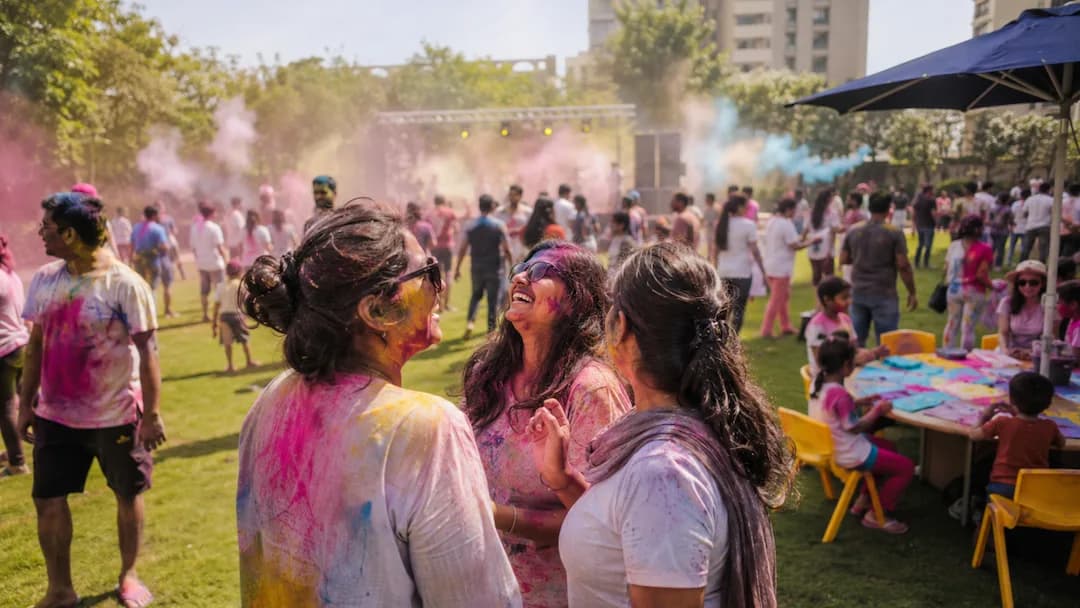
Every other version of Holi content assumes one kind of crowd. A housing society never has just one. The same clubhouse lawn needs to host residents who want loud music, full colour play, and water, alongside families who want their toddler to have a gentle, safe first Holi, alongside elderly residents who'd rather watch from the side with a cup of thandai than get anywhere near a colour cannon.
Trying to run all three as one undifferentiated event is usually where Holi celebrations in societies go wrong, either the energy gets watered down trying to suit everyone, or the calmer residents quietly stop showing up year after year because it's stopped feeling like their event too.
Structuring Your Society's Holi So Both Crowds Actually Enjoy It
The fix isn't choosing one crowd over the other, it's giving each one its own space and time within the same event.
A Dedicated Kids' Zone, Not Just "Watch the Adults"
A separate, clearly marked area for children, away from the main colour-and-water zone, makes a bigger difference than almost anything else you can plan. This doesn't need much: a roped-off corner of the lawn, supervision from a couple of parent volunteers or a hired host, and activities that don't depend on the same intensity of colour play younger kids aren't ready for.
Timing the Day in Two Phases
Many societies run a calmer morning block, music, snacks, gentle colour play, family-friendly games, followed by a separate, louder afternoon block for residents who want the full DJ-and-colour experience. This lets both crowds get what they actually want without competing for the same space at the same time, and it gives elderly residents an easy, comfortable window to participate in the morning without feeling pressured to stay for the louder part.
Keeping Elderly Residents Comfortable Without Excluding Them
A shaded seating area near, but not inside, the main colour zone lets elderly residents watch, chat, and feel part of the celebration without being in the path of water balloons or color clouds. Something as simple as serving them first during the snack rounds, before the crowd gets too colourful to navigate comfortably, goes further than most committees plan for.
Activities Beyond the Default DJ-and-Colour Formula
Almost every Holi event, society or otherwise, defaults to the same formula: music, colour, snacks. A couple of additions genuinely change how the day feels.
Face Painting as a Controlled, Kid-Safe Alternative
Face painting gives younger children a festive, colourful Holi experience without the unpredictability of full gulal or water play, bright, fun, photo-worthy, and entirely controlled by a professional rather than handfuls of colour thrown by older kids. It works particularly well inside the dedicated kids' zone described above.
A Keepsake Station for Families
A caricature artist set up in the calmer morning block gives families something to do together before the colour play starts, and gives residents a reason to actually gather and chat rather than just showing up for the music later.
A Host Who Manages the Whole Day
Running two phases smoothly, calm morning into high-energy afternoon, needs someone managing announcements, timing, and transitions. A professional host takes that job off a volunteer committee member's plate, which matters more at society scale than at a single family party, since the audience here can run into hundreds of residents.
Going Eco-Friendly Without Losing the Energy
Herbal and organic gulal, made from flower and plant extracts, has become a real, growing preference for society events specifically, partly for the obvious health reasons around synthetic colour, and partly because it's genuinely more comfortable for older residents and small children. Pairing this with simple water-conservation steps, limiting open hose play, using buckets instead of running taps, and reusable cups or plates instead of disposable ones, doesn't cost much extra and tends to matter to exactly the kind of multi-generational, long-term resident community a housing society actually is.
Budgeting and Organizing as a Committee, Not a Single Client
Most Holi planning content assumes one person paying for one event. A society works differently: funds usually come from resident contributions or the maintenance budget, decisions go through a committee rather than one decision-maker, and the people actually running the event on the day are volunteers, not professionals.
A few things make this easier. Settling on a total budget and getting committee sign-off before approaching any vendor avoids the awkward back-and-forth of renegotiating after quotes come in. Working with one vendor who can handle decor, an activity or two, and a host together, rather than coordinating separately with three or four different people, reduces the coordination load on whichever committee member ends up running point. And collecting resident contributions with a clear, simple breakdown of what the money covers tends to get a better response than a vague request for funds.
A Short Checklist for RWA Committees
A few questions worth settling before the planning gets too far along:
- Has the committee agreed on a two-phase structure (calmer morning, louder afternoon), or is the plan still one undifferentiated event?
- Is there a clearly designated, supervised space for children, separate from the main colour zone?
- Has the vendor or activity team worked a large, multi-generational residential crowd before, not just a private party?
- Is the budget settled and approved before vendor conversations start, or is it still being worked out as quotes come in?
- Is there a simple eco-friendly policy (herbal colours, water limits) the whole society has actually agreed to, rather than left to individual residents to decide?
Where Born To Banger Fits In
We're not trying to run your entire society's Holi logistics end to end, your committee knows the building, the residents, and the budget better than anyone else can. What we bring to a housing society Holi celebration is the activity and entertainment layer that actually needs a professional: face painting for the kids' zone, a caricature artist for the calmer morning block, and a host who can manage announcements and timing across a crowd that might be a few dozen families or a few hundred.
Tell us your society's size, whether you're planning one event or two separate phases, and what's gone wrong in past years, and we'll suggest what actually fits rather than a one-size package.
Frequently Asked Questions
When is Holi in 2027?
Holika Dahan falls on Monday, 22 March 2027, with Rangwali Holi, the main colour-play day, on Tuesday, 23 March 2027. Some sites currently show outdated or incorrect dates, so it's worth confirming against a current source before booking vendors.
How do we plan a Holi event that works for both kids and adults in our society?
Run it in two phases: a calmer, family-friendly morning block with gentle colour play and a separate kids' zone, followed by a louder, higher-energy afternoon block for residents who want a full DJ-and-colour celebration. This lets both crowds get what they want without competing for the same space.
What activities work well for a housing society Holi celebration?
Face painting works well as a controlled, kid-safe alternative to full colour play, especially within a dedicated children's zone. A caricature artist suits the calmer morning block, and a professional host helps manage a large, multi-generational crowd across both phases of the day.
How can we make our society's Holi celebration more eco-friendly?
Switch to herbal or organic gulal instead of synthetic colours, limit open hose or sprinkler use in favour of bucket-based water play, and use reusable cups and plates instead of disposable ones. None of this requires a significantly bigger budget.
How should an RWA budget for a Holi celebration?
Settle on a total budget and get committee sign-off before approaching vendors, rather than negotiating after quotes arrive. Working with one vendor who can cover decor, an activity, and a host together usually reduces both cost and coordination effort compared to booking each separately.
Do housing societies across Delhi NCR celebrate Holi differently from individual families?
Generally yes. Society celebrations involve a much larger, more mixed-age crowd in one shared space, funded through resident contributions rather than a single host, and usually run by a volunteer committee rather than a professional planner from the start. Planning for that difference, rather than following advice written for a single family or friend group, makes the actual event easier to run.
If your housing society is planning Holi 2027 and wants an activity layer that actually works for a mixed-age, multi-generational crowd, see what Born To Banger can put together for your society anywhere in Delhi, Gurugram, or Noida.
Make Your Event Unforgettable
Book professional artists, interactive activities, and entertainment that keep your guests engaged and entertained.
Get the latest in your inbox
Actionable insights on events, workshops, and engagement—no spam.
Make Your Event Unforgettable
Book professional artists, interactive activities, and entertainment that keep your guests engaged and entertained.
Related reads
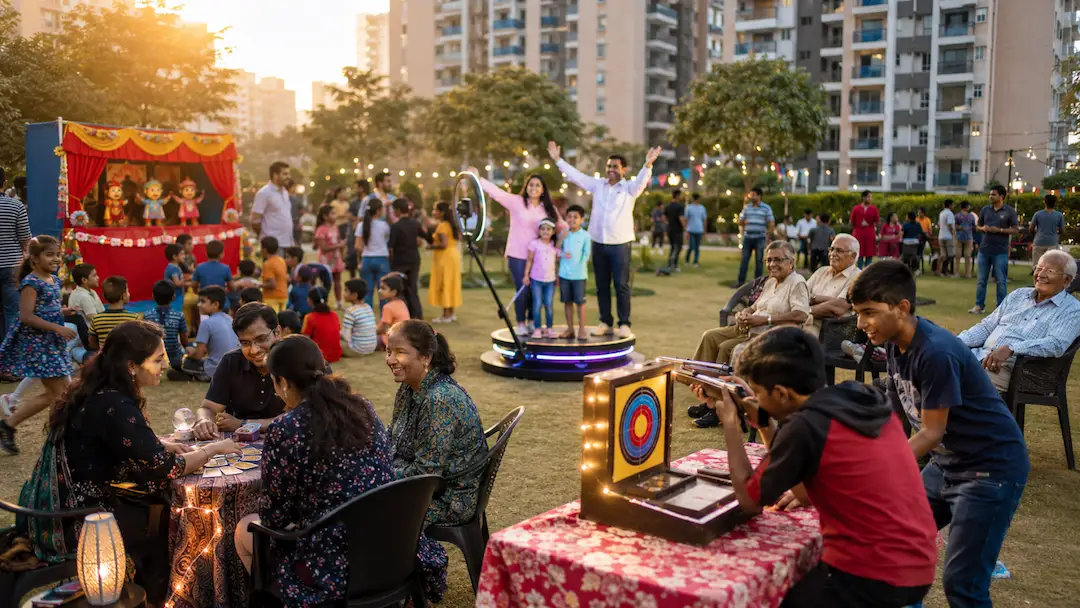
Society Fun Day Ideas for Delhi NCR: An Age-Inclusive Planning Guide for RWAs
Planning a society Fun Day or RWA family event in Delhi NCR? Get theme ideas, age-inclusive activities, budgeting, and a realistic timeline that actually gets residents to show up.
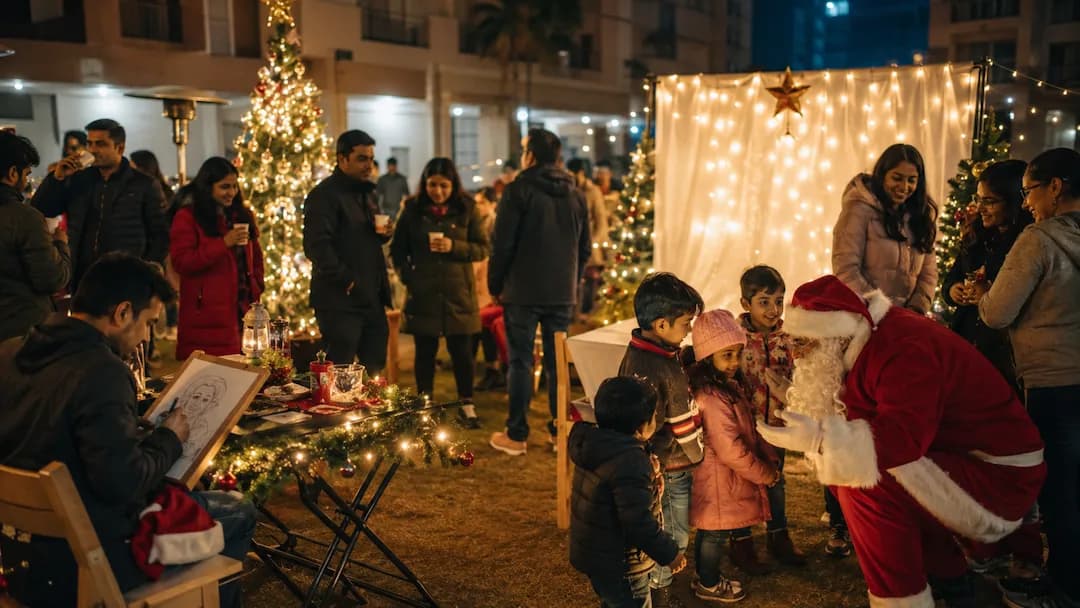
Society Christmas Celebration Ideas for Delhi NCR: Beyond the Lobby Tree
Planning a Christmas celebration for your housing society in Delhi NCR? Get formats, activities, budgeting, and a realistic timeline for a genuinely inclusive community evening.
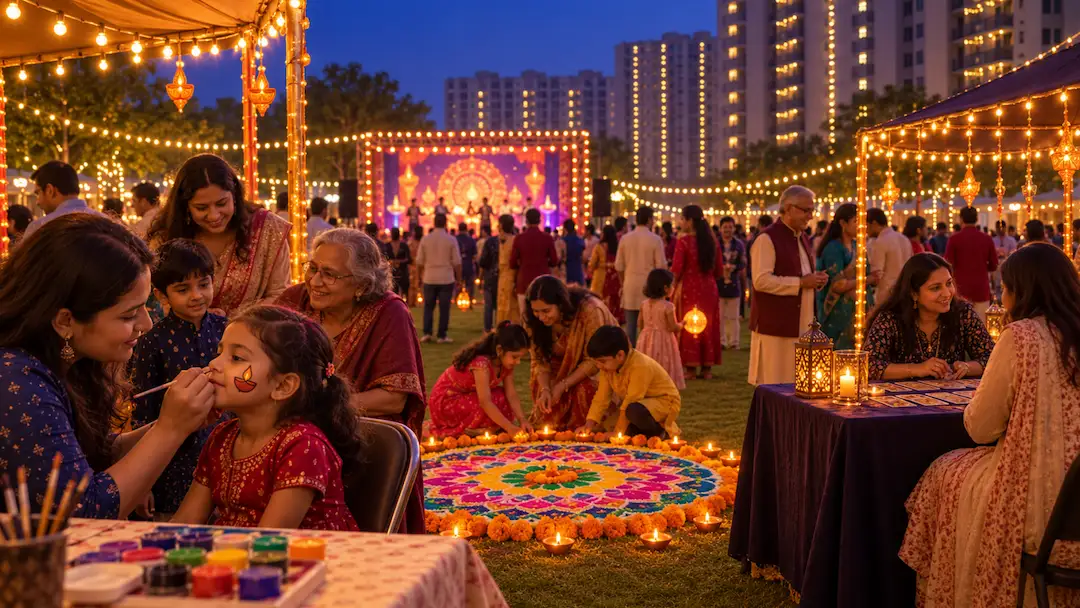
Society Diwali Mela Ideas for Delhi NCR: Beyond Lights and Rangoli
Planning a Diwali Mela for your housing society in Delhi NCR? Get formats, activities, budgeting, and a realistic timeline for a celebration residents actually look forward to.
Latest reads

Delhi NCR Party Entertainment Pricing Report 2026: Original Data Across 51 Activities
Original pricing data across 51 party entertainment activities in Delhi NCR. Average costs, category breakdowns, and location pricing, citable and sourced.
How Much Should You Budget for Activities at a Corporate Family Day? Real Numbers by Headcount
Skip the bundled quote. Real per-head activity pricing for corporate family days in Delhi NCR, broken down by headcount, so HR teams can budget with actual numbers.
Skip the Separate Return Gift: Activities That Double as Party Keepsakes
Return gifts eat 20-35% of Delhi NCR party budgets. See which activities like mug caricature and DIY crafts can replace a separate return gift entirely.